Sharad Purnima and the Raas Leela: Why the Scripture's Own Listener Challenged It
Drafted with the help of AI from the original texts named in the article; I read and correct every article after it is published. How we use AI
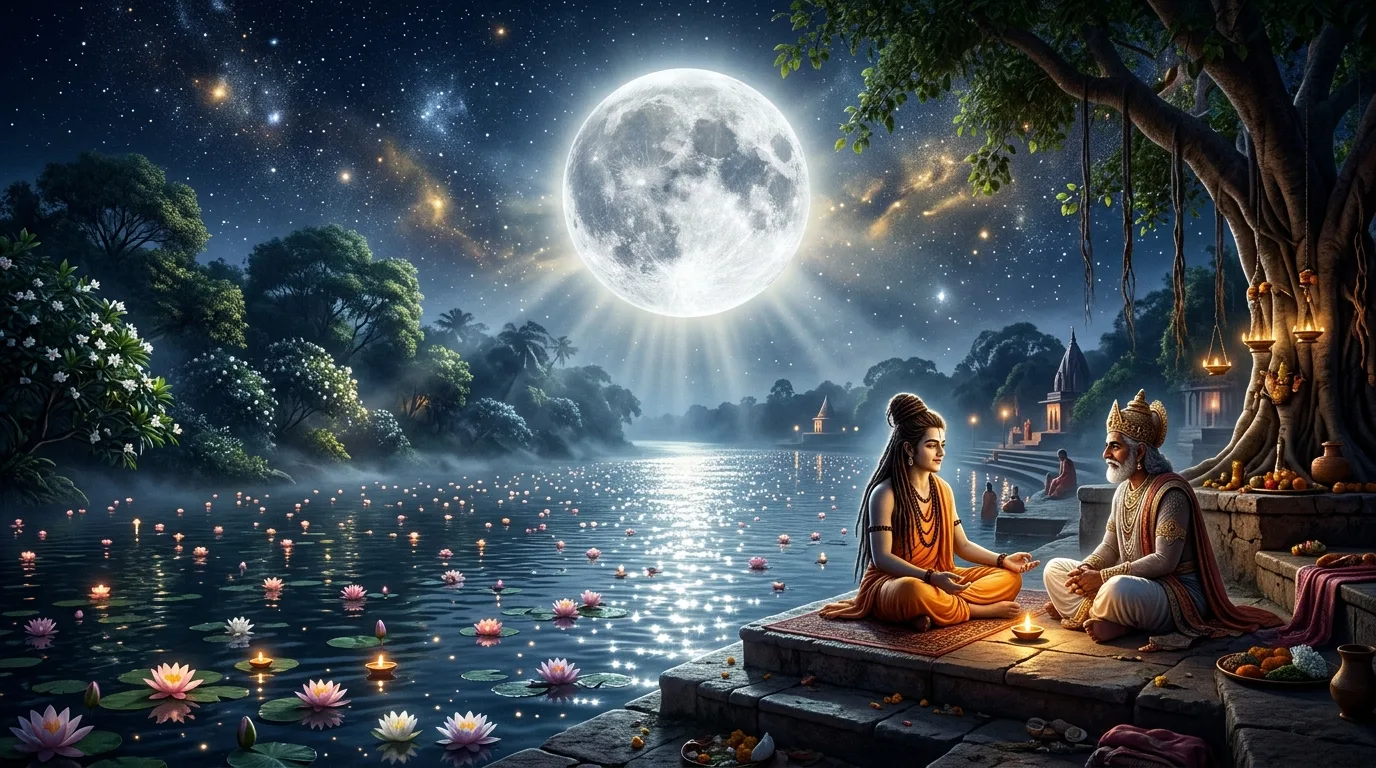
Explore the real meaning of Sharad Purnima, King Parikshit's hard question in the Bhagavata Purana, Ayurveda's kheer tradition, and what science actually says.
In this article
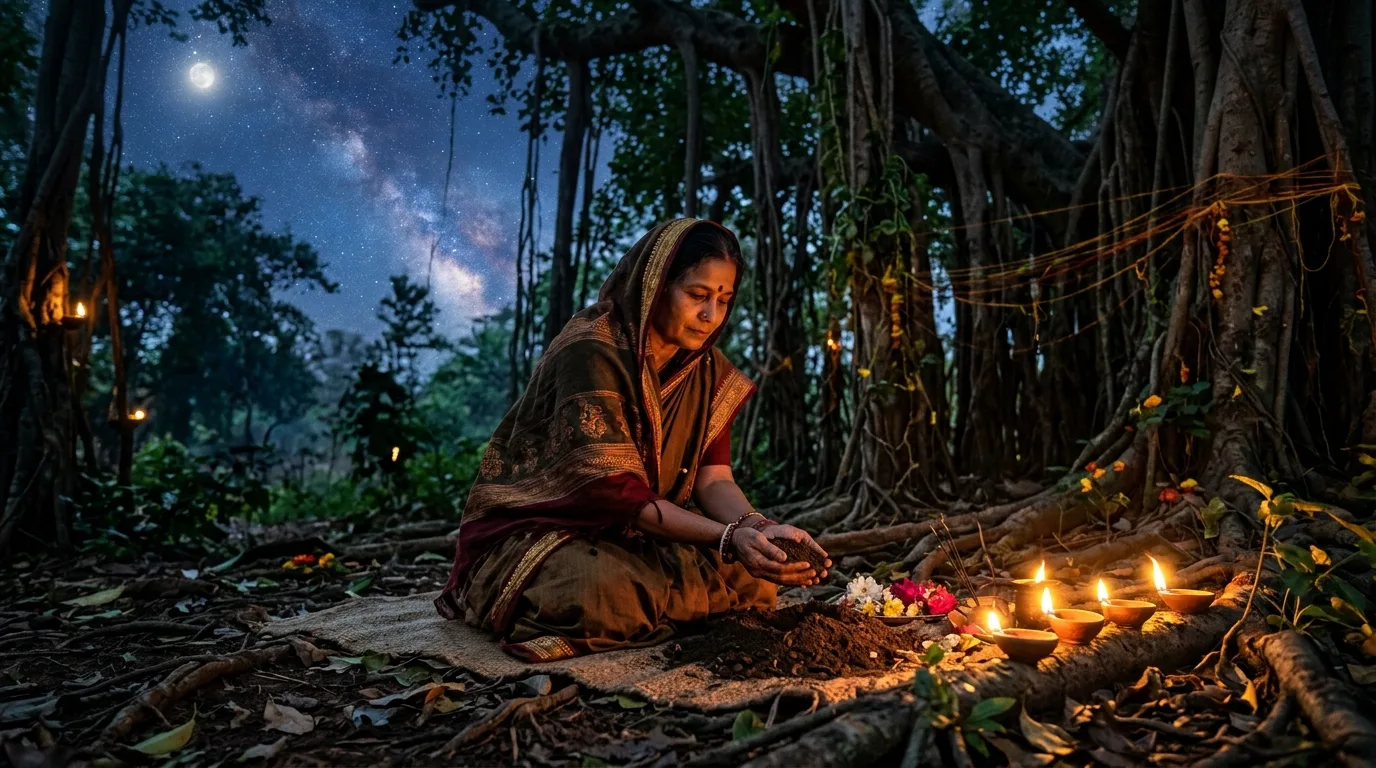
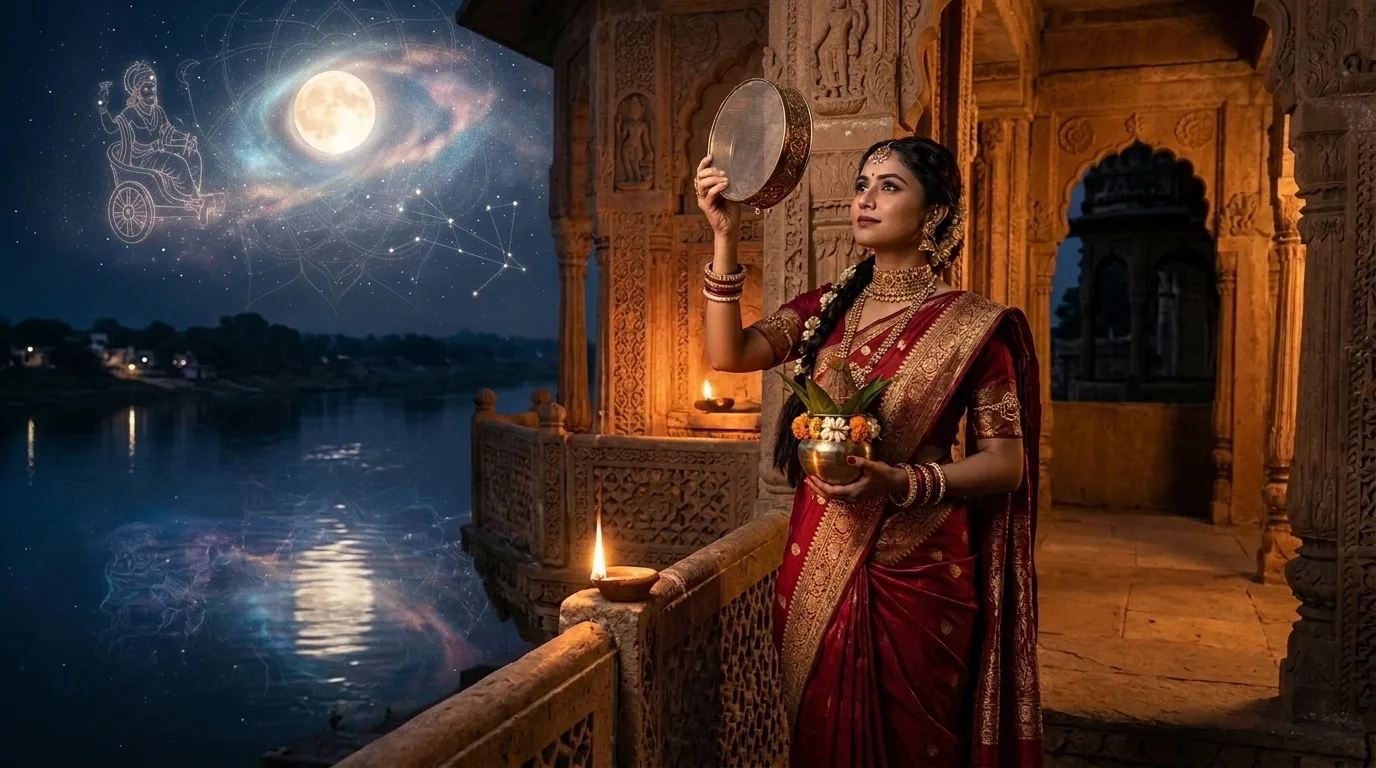
If you grew up in an Indian household, your memory of Sharad Purnima probably involves a quiet routine. Sometime late in the evening, your mother or grandmother prepared a pot of sweet rice kheer, covered it with a thin muslin cloth or wire mesh, and set it out on the terrace under the full autumn moon. You were probably told that drops of nectar fall from the sky on this night, turning ordinary food into medicine.
At the same time, temple calendars announce this as the night of the Maha-Raas, the moment when Krishna played his flute in the forests of Vrindavan and danced with the married women of the village.
For a long time, I found those two images hard to hold together. On one hand, you have a gentle domestic ritual about moonlight and sweetened milk. On the other, you have a midnight gathering that sounds, at first glance, like a social scandal. If you have ever felt uneasy about that contrast, you are in good company. The very first person who listened to this account in the ancient texts felt the exact same unease, and he interrupted the teacher to demand a clear explanation.
What the Bhagavata Purana Actually Records
The primary source for the Raas Leela is found in the tenth book of the Srimad Bhagavata Purana, across five continuous chapters known as the Raas-panchadhyayi, running from chapter 29 to chapter 33. The narrative also appears in the Vishnu Purana and the Harivamsha, but the Bhagavata treats it with the greatest philosophical care.
The text opens in chapter 29, verse 1, by setting a very deliberate scene:
Bhagavan api ta ratrih saradotphulla-mallikah
vikshya rantum manas cakre yogamayam upasritah
The verse says that the Lord, seeing those autumn nights blooming with fragrant jasmine flowers, turned his mind toward play, taking shelter of his Yogamaya.
The text specifies right away that Krishna does not act out of ordinary worldly impulse. He takes shelter of Yogamaya, his own internal spiritual power, rather than Mahamaya, the force that governs worldly desire and delusion.
By the thirty-third chapter, the text describes a grand circle of dance on the cool white sands of the Yamuna river. The text uses an exact phrase: between every two women of Vraja, one form of Krishna appeared. He stood beside each dancer, giving each one his undivided presence while remaining single and undivided himself.
Hearing this did not produce pious reverence in his listener. King Parikshit, who was sitting on the banks of the Ganga preparing for his death, stopped the sage Shukadeva abruptly. His objection in chapter 33, verses 26 to 29, is direct and unsparing:
samsthapanaya dharmasya prasamaya ca cetasam
avatirno hi bhagavan amsena jagad-isvarah
sa katham dharma-setunam vakta kartabhirakshita
pratipam acarad brahman para-darabhimarsanam
Parikshit asks: the Lord descends to protect dharma and to quiet the unruly minds of human beings. He is the teacher, the maker, and the guardian of moral boundaries. How then could he do the opposite, embracing the wives of other men?
Parikshit did not ask a gentle question. He used strict legal language. He spoke of the protective dams of social order and the violation of another man's marriage. If the teacher of truth breaks his own moral law, Parikshit argued, then human morality loses its foundation.
Shukadeva did not avoid the challenge. He answered with a four-part explanation that forms the intellectual core of the entire text.
First, he pointed to the nature of transcendent purity. Just as a blazing fire burns wood, pure ghee, and dry rubbish alike without being made dirty by what it touches, the supreme source of life cannot be contaminated by contact with his own creation.
Second, Shukadeva immediately laid down a strict prohibition for human beings. Mortals must never imitate this action, even in thought. Anyone who tries to copy this out of foolish arrogance will perish, just as anyone other than Lord Shiva who drinks deadly poison from the churning ocean would die on the spot. Shiva held cosmic poison in his throat to save others; unless you can swallow poison without dying, you have no right to imitate divine play.
Third, Shukadeva explained the metaphysics of the indwelling self. Krishna is the inner witness living inside the Gopis, inside their husbands, and inside all living beings. In ordinary life, an unfaithful person takes what belongs to another person. But how can the indwelling soul of the universe steal from another, when there is no second entity apart from him? The text adds a practical detail: through the working of Yogamaya, every husband in Vraja perceived his wife sleeping peacefully beside him at home throughout the night.
Fourth, the text recalls the test of renunciation that occurred in chapter 29. When the women first arrived in the forest at midnight, Krishna gave them a stern lecture. He commanded them to return home, care for their children, and serve their husbands. The women answered with pure Upanishadic logic: when you water the root of a tree, you automatically nourish every branch and leaf. Serving the source of all life fulfills all duties; clinging to the outer role while ignoring the life inside it is empty form.
Shukadeva concludes chapter 33 with a clear medical metaphor. He says that anyone who studies this pastime with genuine faith develops pure devotion and quickly cures that chronic disease of the human heart: selfish lust.
The Core Sanskrit Vocabulary Behind the Night
When texts like the Bhagavata Purana are translated into everyday English, fine distinctions disappear. Words like dance, desire, and play sound casual, but in classical Sanskrit, each word carries an exact philosophical definition.
The word Rasa comes from the root that means to taste or relish essence. It connects directly to the famous line in the Taittiriya Upanishad: the Supreme is pure aesthetic essence. A Raas is not ordinary stage dancing. It is a circular configuration where the center remains equidistant from every single point on the perimeter. It depicts infinite awareness reflected equally into individual souls without becoming fragmented.
The distinction between Yogamaya and Mahamaya is central to the narrative. Mahamaya is the material energy that makes us identify with our physical bodies and feel separate from everyone else. Yogamaya is the higher spiritual capacity that allows the infinite to meet the finite in personal closeness, without losing its divine nature.
Classical teachers, especially the later commentators like Krishnadasa Kaviraja, drew a sharp line between Kama and Prema. Kama is the desire for one's own sensory, emotional, or psychological satisfaction. It is possessive, self-centered, and seeks to consume the other. Prema is the complete absence of self-interest, an unreserved absorption in the happiness of the beloved. The women of Vraja appeared to show intense desire, but their desire was stripped of all self-interest.
The Bhagavata repeatedly calls Krishna Atmarama and Apta-kama. An Atmarama is one whose joy is entirely self-contained; an Apta-kama is one whose desires are already eternally fulfilled. Krishna did not dance because he lacked companionship or needed sensory stimulation. His play was the spontaneous overflow of inner fullness.
In the Skanda Purana, the night of Sharad Purnima is known as Kojagari, named after the midnight question: Ko Jagarti? It literally means, "Who is awake?" The question is not about insomnia. It asks whether human consciousness is clear and alert, or lost in the heavy sleep of spiritual neglect.
When Shukadeva speaks of the Hrid-roga, he refers to the deep restlessness of the human heart. It is the chronic habit of using other people and material objects to satisfy an inner thirst that only contact with the infinite can quench.
Finally, ancient literature speaks of Soma and Chandrika. Soma is the cooling, restorative life-force associated with the moon. Chandrika is moonlight itself. Autumn moonlight was prized because the monsoon clouds had parted, leaving the night sky clear, bright, and soothing to tired eyes and heated bodies.
Four Ways Classical Scholars Read the Night
Different schools of Indian thought have reflected on Sharad Purnima for centuries, and they do not all emphasize the same details.
The non-dualist tradition of Advaita Vedanta, represented by Shridhara Svami in his commentary Bhavartha-dipika, reads the Raas Leela primarily as an allegory of spiritual liberation. In this reading, the women of Vraja represent the individual minds or living souls that have detached themselves from physical body-consciousness and worldly family labels. The midnight forest represents the quiet place of meditation, free from outer noise. When Krishna appears between every two dancers, it illustrates the core Advaitic realization: one undivided consciousness exists equally within every human heart.
The Gaudiya Vaishnava commentators, including Jiva Gosvami and Vishvanatha Cakravarti Thakura, take a different approach. They insist that the event is real within transcendental reality, rather than an abstract metaphor. They explain that the dancers are eternal expressions of Krishna's own joy-giving capacity, known as Hladini-shakti.
These commentators draw attention to a crucial moment in chapter 29. The moment the dancers felt a flicker of personal pride, thinking that Krishna belonged exclusively to them, Krishna vanished into thin air. He left them to wander in sorrow through the forest, an agony recorded in the songs of chapter 31. The tradition teaches that genuine spiritual union cannot happen as long as there is even a trace of possessive ego. The ego must be purified by longing before union can return.
A third view comes from Vallabhacharya, the founder of the Pushtimarga tradition. In his commentary Subodhini, he describes this pentad of chapters as Nirodha-lila. Nirodha means the complete and effortless forgetting of worldly anxieties, accompanied by deep love for God. For Vallabhacharya, the autumn full moon represents the complete fruit of divine grace, something that cannot be earned by mechanical rituals or social effort alone.
Alongside these Vaishnava commentaries sits the Smarta tradition of the Skanda Purana and the Bhavishyottara Purana. Here, the night is focused on Goddess Lakshmi. The text describes her moving across the earth at midnight, asking who is awake. Those who spend the night in quiet contemplation, study, and simple fasting receive her blessing of inner clarity and steady prosperity. Those who spend it in heavy sleep or thoughtless indulgence invite stagnation into their homes.
Echoes in the Upanishads and Ancient Medicine
The events of Sharad Purnima do not stand alone. They connect directly to older philosophical texts and classical medical treatises.
In the Brihadaranyaka Upanishad, in section 2.4.5, the sage Yajnavalkya speaks to his wife Maitreyi before leaving for the forest. He tells her something that sounds startling at first:
Na va are patyuh kamaya patih priyo bhavati, atmanas tu kamaya patih priyo bhavati
He explains that a husband is not dear for the sake of the husband; he is dear for the sake of the inner Self. A wife is not dear for the sake of the wife, but for the sake of the inner Self.
Yajnavalkya's teaching explains the deeper motive of the dancers in the Bhagavata. When human beings love each other, they are unconsciously seeking the divine awareness that animates the other person. The women of Vraja simply recognized the source directly. They were not abandoning love; they were tracing love back to its origin.
The Narada Bhakti Sutras also point to this episode. In sutra 21, the sage Narada states that the supreme definition of divine love is exemplified by the women of Vraja. But in sutra 22, he adds an essential qualification: even in their greatest intimacy, they never forgot the transcendent nature of the Divine. Whenever they lost sight of that truth, their connection broke down.
The most practical connection appears in classical Ayurveda. In the Caraka Samhita, in the sixth chapter of the Sutra-sthana, the sage Caraka details the seasonal routine for autumn, known as Sharad Ritu.
During the rainy season that precedes autumn, the human digestive fire is weak, and heat, known as Pitta, accumulates quietly in the body due to humidity and acidic water. When autumn arrives, the rain clouds vanish, and the sun shines with sudden, sharp heat. This sudden heat causes the accumulated Pitta to flare up, leading to seasonal fevers, hyperacidity, skin irritations, and bile disturbances.
To counteract this seasonal flare, Caraka prescribes sweet, bitter, and light foods. He specifically recommends foods prepared with milk, rice, and sugar, known as payasa or kheer. Most interesting of all, Caraka explicitly prescribes Candrika-sevana, the practice of sitting outdoors under the cool autumn moonlight. Classical medicine viewed the post-monsoon autumn moon as uniquely cooling and restorative, capable of calming internal somatic heat.
What Science and Environmental Biology Observe
When modern readers look at these ancient traditions, it is tempting to jump to extremes. Some people dismiss the whole festival as superstition, while others claim ancient sages discovered quantum physics and space science. Neither extreme is fair. Real science shows modest, genuine connections in environmental optics, sleep biology, and human psychology.
The first noticeable factor is atmospheric clarity. Across the northern plains of the Indian subcontinent, the monsoon rains wash the air clean of dust, smoke, and particulate matter. By October, the heavy water vapor in the sky drops sharply. Because the air is dry and clean, light travels through the atmosphere with very little scattering. The full moon of early autumn appears visibly brighter and crisper than the hazy full moons of summer.
This optical clarity has a direct effect on human biology. Modern chronobiology has established that exposure to bright full-moon light suppresses the nighttime production of melatonin, the hormone that makes us sleepy. In ancient times, before electric lighting, the bright light of an autumn full moon naturally kept people awake and alert. The injunction to hold a night vigil on Sharad Purnima did not fight human biology; it worked alongside a natural circadian shift, making it easier to sit in quiet meditation late into the night.
The second area involves the physics of cooling food. When you place a pot of hot kheer outdoors on a clear autumn night, it undergoes rapid radiative cooling. In October, daytime temperatures can still be quite warm, but nighttime temperatures drop significantly.
Leaving the milk preparation open to the night sky cools it down quickly and evenly. In traditional dairy practice, cooling milk rapidly prevents the growth of unwanted bacteria that thrive in warm food. By morning, the kheer is thick, cool, and soothing.
From a nutritional standpoint, eating cooled rice cooked in milk and mild natural sugar provides a soothing, alkaline dish. It coats the stomach lining, neutralizes excess gastric acid, and provides easily absorbed energy. This aligns neatly with what people experiencing autumn bile spikes need, without requiring any miraculous explanation.
Finally, modern psychology offers an interesting parallel to the dilemma King Parikshit raised. The psychologist Carl Jung noted that human beings often struggle when their natural emotional energy, which he termed libido, is either repressed or indulged blindly. Jung argued that emotional maturity requires sublimation, redirecting raw instinctual energy toward higher, meaningful ideals.
Parikshit assumed that any intense passion between men and women must be physical desire. Shukadeva showed that the story was doing something entirely different. It took the most intense human emotion, romantic devotion, and redirected it toward the infinite source of all life. In doing so, it emptied desire of its possessiveness and turned it into an instrument of inner peace.
Sorting Sacred Poetry from Literal Claims
To respect both classical literature and rational thinking, we need to separate what the original texts actually mandate from what regional folk culture added over time.
The popular claim that literal drops of liquid nectar rain down from the moon into the kheer is a poetic misunderstanding. The scriptures speak of the moon giving off Soma, meaning a cooling, nourishing quality of light. Folk storytelling took that poetic image and turned it into a physical claim about liquid medicine dripping from the sky. No modern observatory or laboratory has ever detected liquid drops falling from the moon onto earth.
Here is how the original canonical sources compare with later regional additions:
| Tradition or Custom | Canonical Scripture and Status | Later Folk or Regional Addition |
|---|---|---|
| Celebration of the Raas Leela | Canonical: Detailed in the Bhagavata Purana (10.29–33), Vishnu Purana, and Harivamsha. | Folk theatre plays, street pageants, and social Garba or Dandiya events developed centuries later as harvest festivities. |
| Kojagari Night Vigil | Canonical: Prescribed in the Skanda Purana and Bhavishyottara Purana as a spiritual vigil with fasting. | The regional practice in Bengal and Mithila of playing dice games all night is a domestic way to stay awake, not a scriptural rule. |
| Placing Kheer under Moonlight | Mixed: Caraka Samhita prescribes moonlight exposure and milk dishes for cooling bile; Puranas mention milk offerings. | The folk belief that physical liquid Amrita drops from the physical moon into the bowl is a literal misreading of poetic metaphor. |
| Kojagari Lakshmi Puja | Canonical: Rooted in the Puranas, which prescribe worshipping Lakshmi alongside Indra on this full moon. | The specific domestic imagery in eastern India, including the barn owl and offerings of flattened rice with coconut, is an agrarian tradition. |
The value of the tradition does not depend on physical miracles. The real benefit comes from eating clean, cooling food during a seasonal transition, enjoying the clear night air, and spending quiet hours contemplating something larger than daily worries.
Frequently Asked Questions
Does literal nectar fall from the moon on Sharad Purnima?
No. The classical texts use the word Soma to describe the cooling, restorative quality of moonlight during the autumn season. Over centuries, popular folklore interpreted this poetic idea literally, creating the story that physical drops of liquid nectar fall from the sky.
Why did King Parikshit object to the Raas Leela?
King Parikshit was concerned about moral consistency. He argued that if the Supreme Lord descends to protect social boundaries and family life, embracing married women from another household would set a harmful precedent for humanity. Sage Shukadeva resolved the concern by explaining that the Lord is the indwelling soul of all beings, not a separate human ego taking someone else's partner, and he strictly forbade ordinary mortals from ever copying the act.
What is the meaning of the word Kojagari?
Kojagari comes from the Sanskrit phrase Ko Jagarti, which translates to "Who is awake?" In the Skanda Purana, Goddess Lakshmi is said to move across the earth at midnight on this autumn full moon. The inquiry asks who is mentally alert, spiritually aware, and living with clear purpose, rather than sleeping away their lives in dullness.
Why does Ayurveda recommend eating kheer on this specific night?
During the transition from the rainy season to autumn, the body experiences a flare of internal heat and bile, known as Pitta. The Caraka Samhita recommends milk-based foods like kheer because they are cooling, sweet, and soothing to the digestive tract. Exposing the dish to cool night air lowers its temperature rapidly, making it an ideal meal to calm seasonal acidity.
Sources
The classical texts and traditions referenced in this study include:
- Srimad Bhagavata Purana, Canto 10, Chapters 29 to 33 (the Raas-panchadhyayi).
- Skanda Purana, Sanatkumara-samhita, section on the Kojagara-mahatmya.
- Bhavishyottara Purana, guidelines for the Kojagara Vrata.
- Caraka Samhita, Sutra-sthāna, Chapter 6 (Ritucarya: guidelines for Sharad Ritu).
- Brihadaranyaka Upanishad, Chapter 2, Section 4 (the dialogue between Sage Yajnavalkya and Maitreyi).
- Narada Bhakti Sutras, aphorisms 21 and 22.
- Classical commentaries: Shridhara Svami's Bhavartha-dipika, Jiva Gosvami's Priti-sandarbha, Vishvanatha Cakravarti Thakura's Sarartha-darshini, and Vallabhacharya's Subodhini.
The modern scientific concepts discussed include:
- Atmospheric optics and radiative cooling under clear night skies.
- Human chronobiology, including lunar light exposure and melatonin regulation.
- Transpersonal psychology, specifically the sublimation of instinctual drives into spiritual devotion.
This reflects what the text itself says; the modern-science comparisons above are interpretation, not an established finding.